A desk clock that consults the sky.
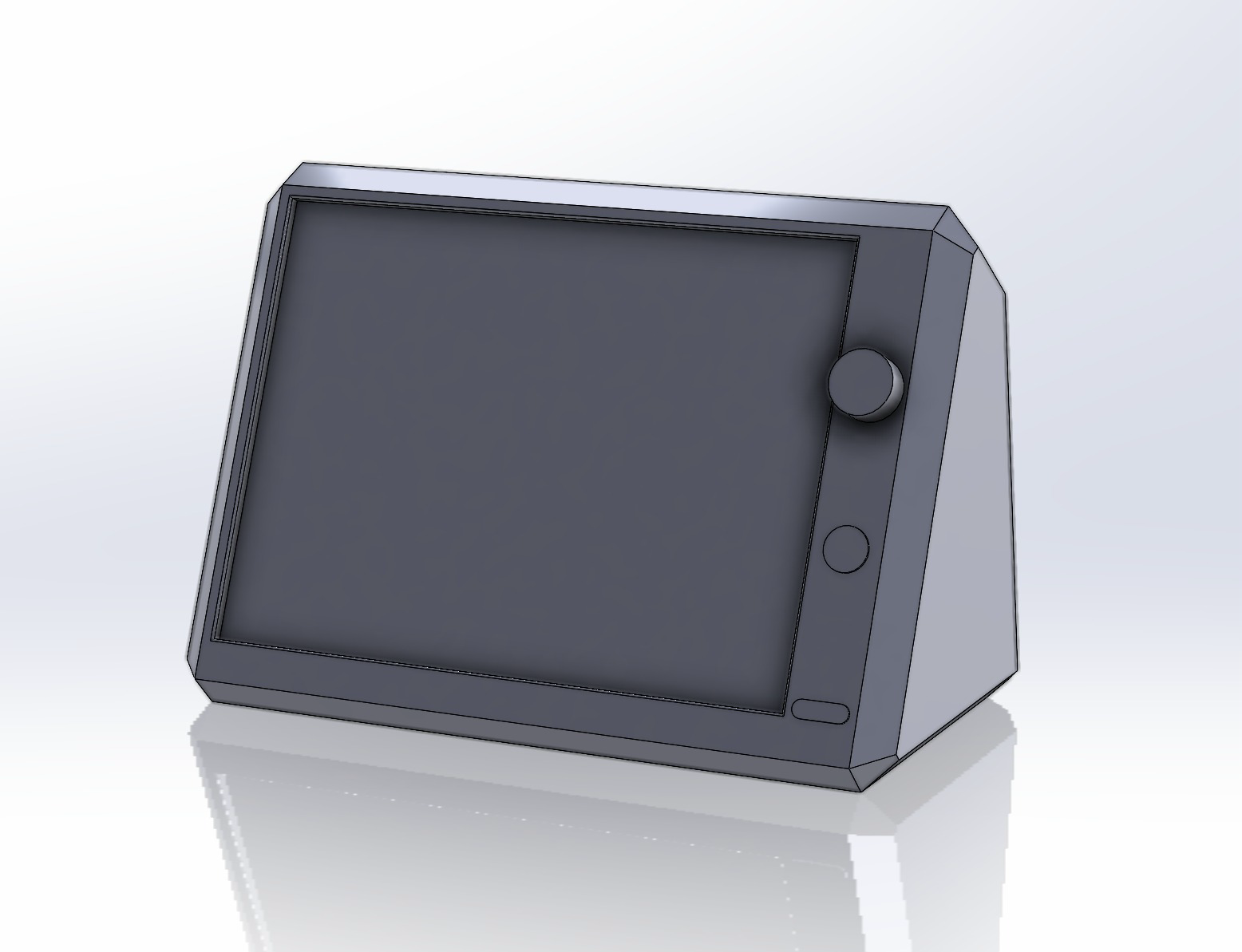
An e-ink smart clock with a custom designed six channel muon detector: a connection to the cosmos on your desk. Every answer it gives comes from a real particle arrival on its 6 inch HD e-ink face.
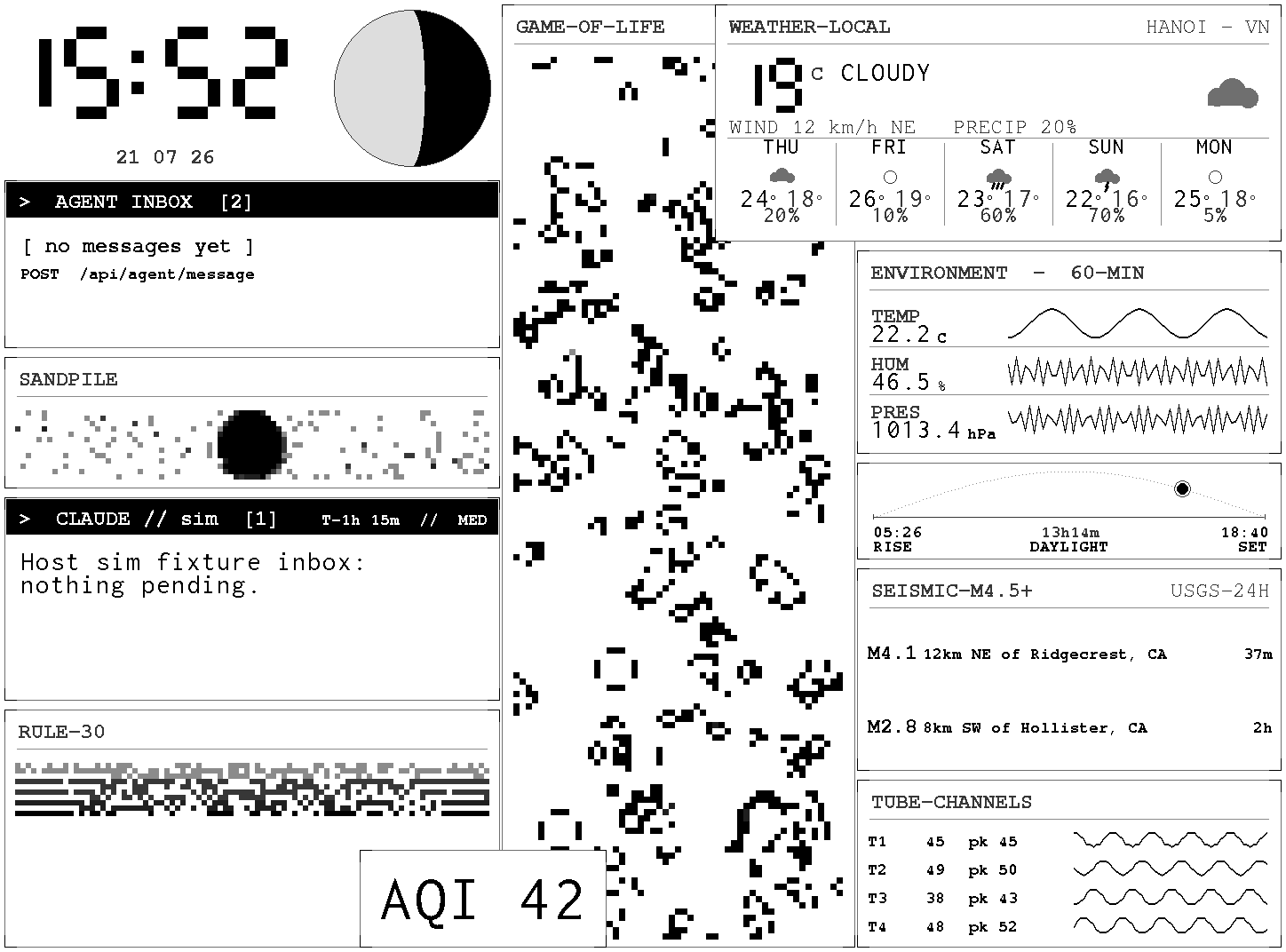
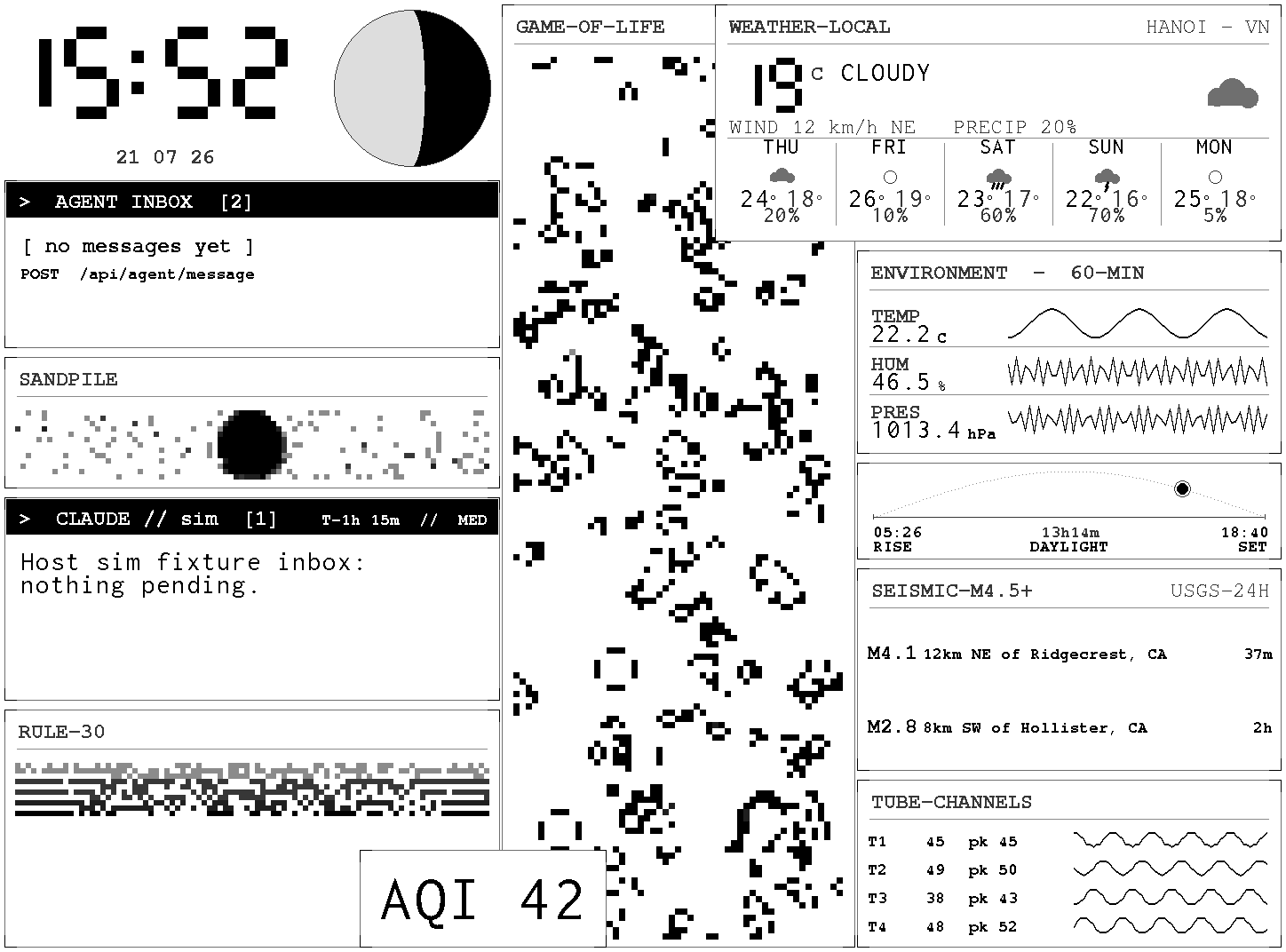
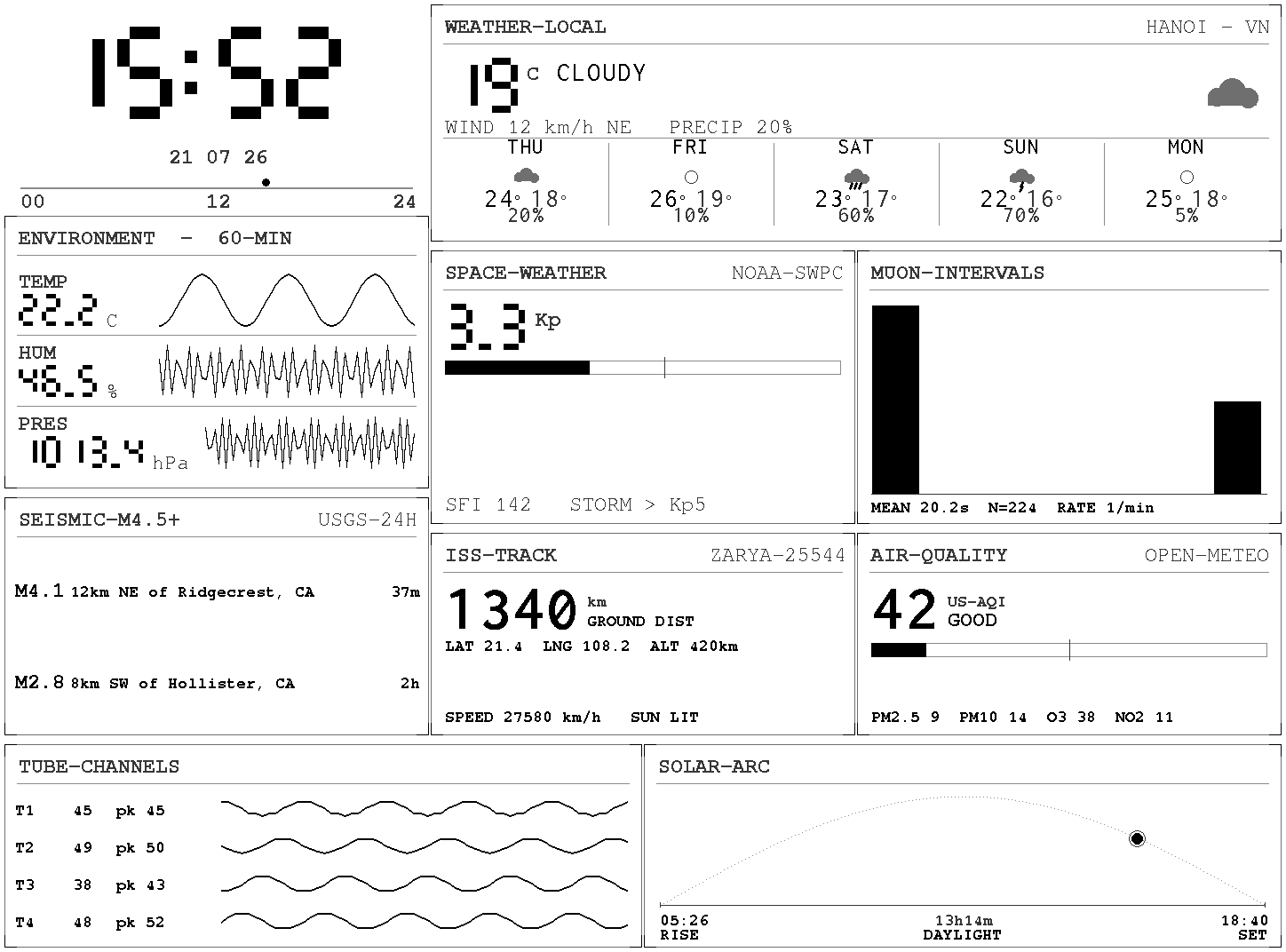
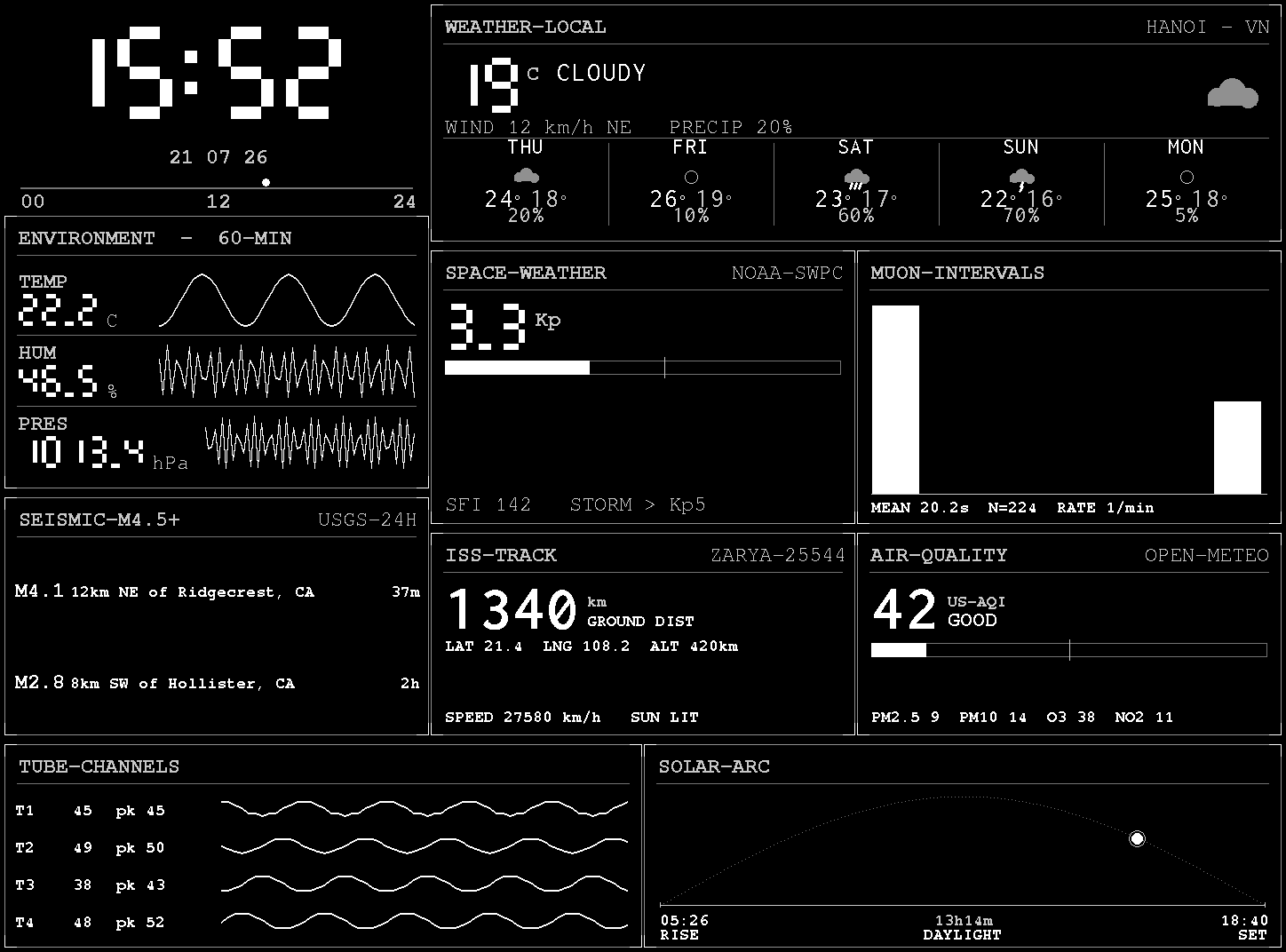
The home dashboard is the default face. The Game of Life column grows from real detections, the tube channels widget shows all four Geiger-Müller tubes counting, and network data (weather, air quality, seismic) fills in around them. Every window is fully customizable and resizable, and the firmware is open source, so you can hook up any API feed you want.
How it works
A cosmic chain reaction, ending on your desk
Four steps, no black boxes. The whole chain is discrete logic you can trace on the schematic.
-
A cosmic ray hits the atmosphere
A proton from somewhere far away smashes into the upper atmosphere and sprays a shower of particles downward. Some of them are muons.
-
Four tubes agree
A 2x2 array of Geiger-Müller tubes feeds six pairwise coincidence gates. Two tubes firing together means one particle passed through both, not local noise.
-
The arrival becomes a bit
A counter free-runs at megahertz speed. The coincidence interrupt samples it at the exact moment of arrival. The low bits are as random as the arrival time, which is to say truly random.
-
The clock answers
Those bits drive the oracle, the games, and the procedural faces, while the e-ink panel shows the time, your environment, and the sky's answer.
Muons are constant and everywhere. Roughly one passes through every square centimeter of the world each minute, straight through the roof, the ceiling, and the clock. What is a muon, how coincidence detection works, and why cosmic rays make good randomness: the physics, in depth.
Faces
Example screens, rendered at native resolution
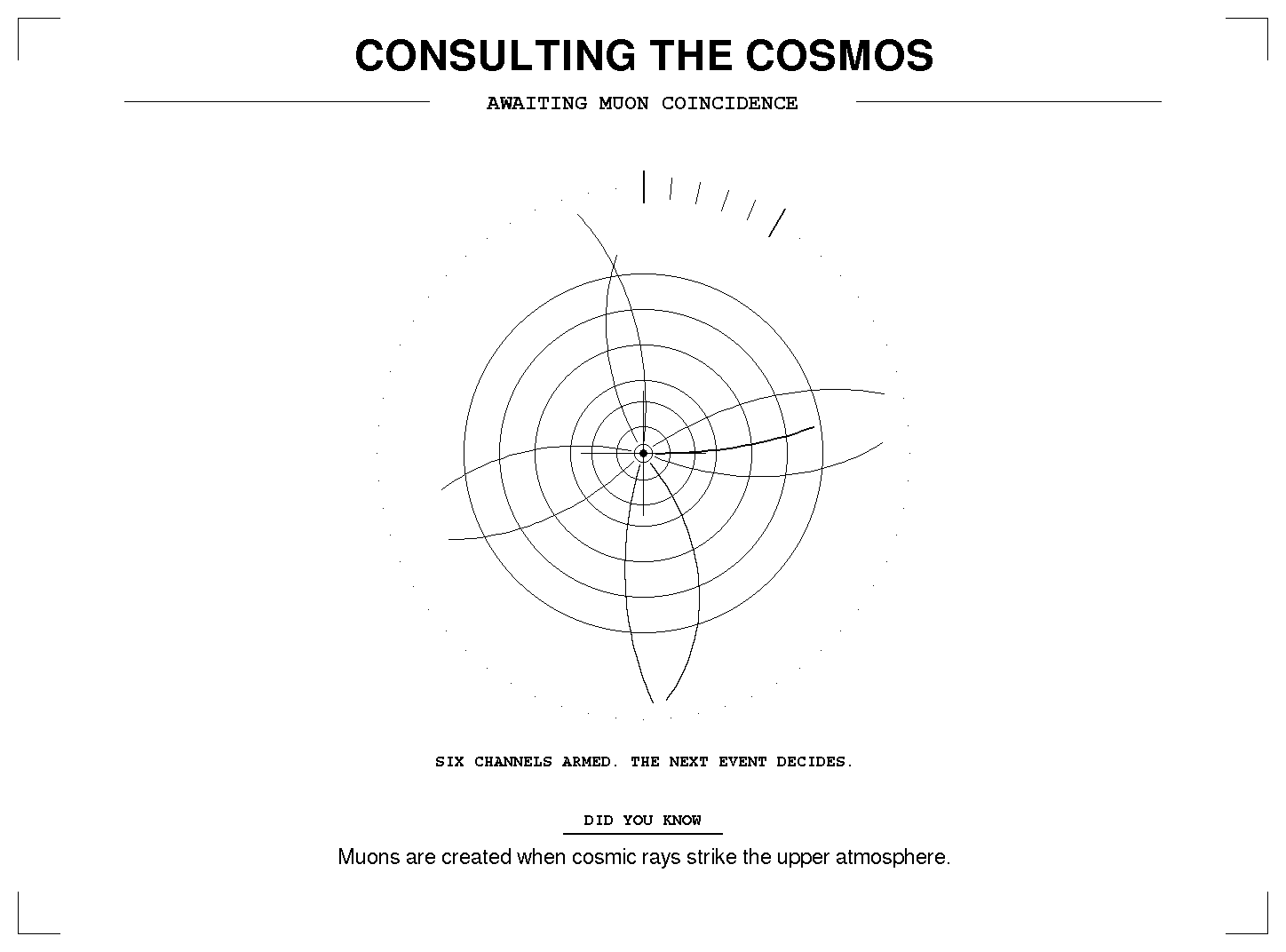
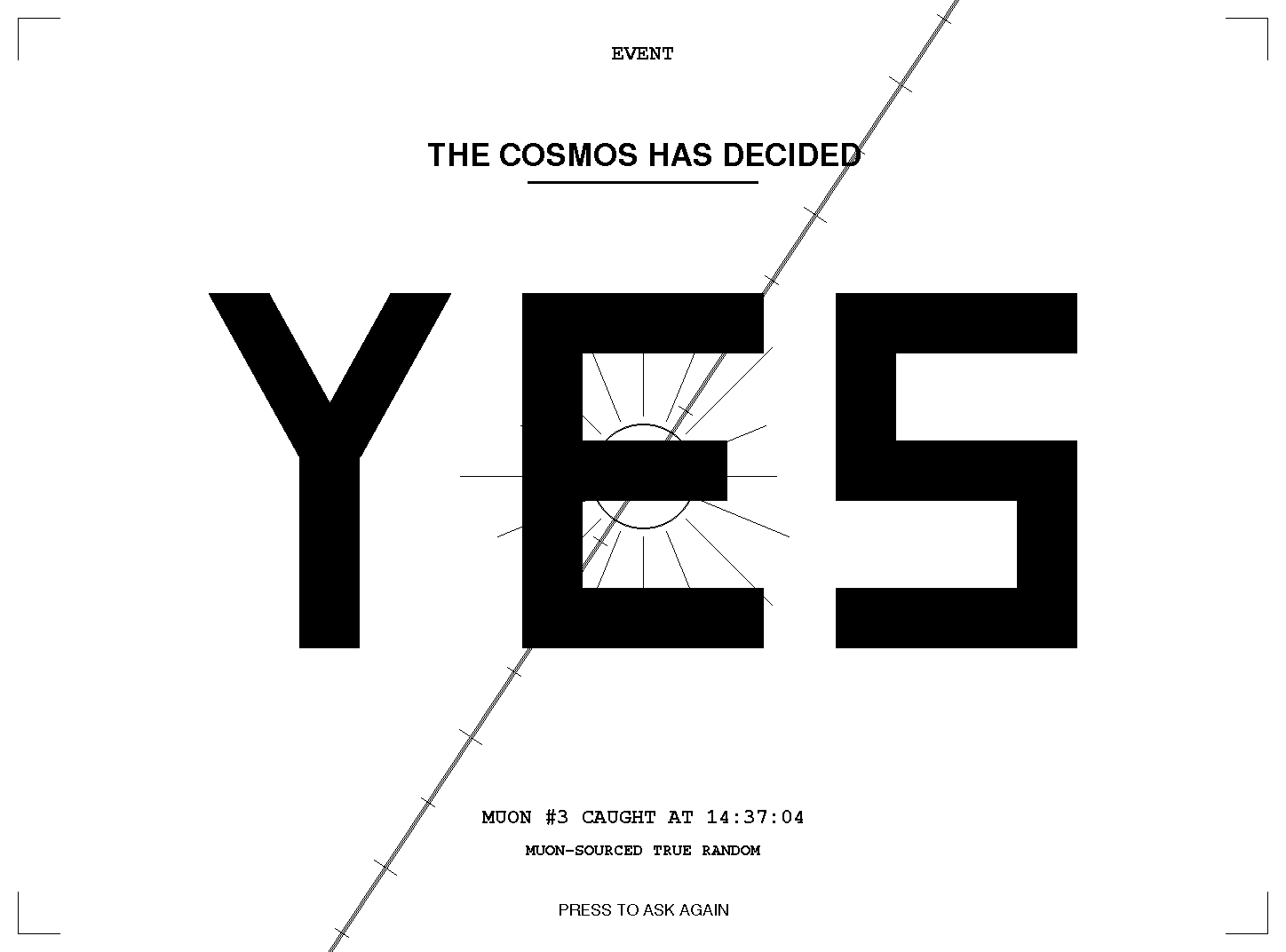
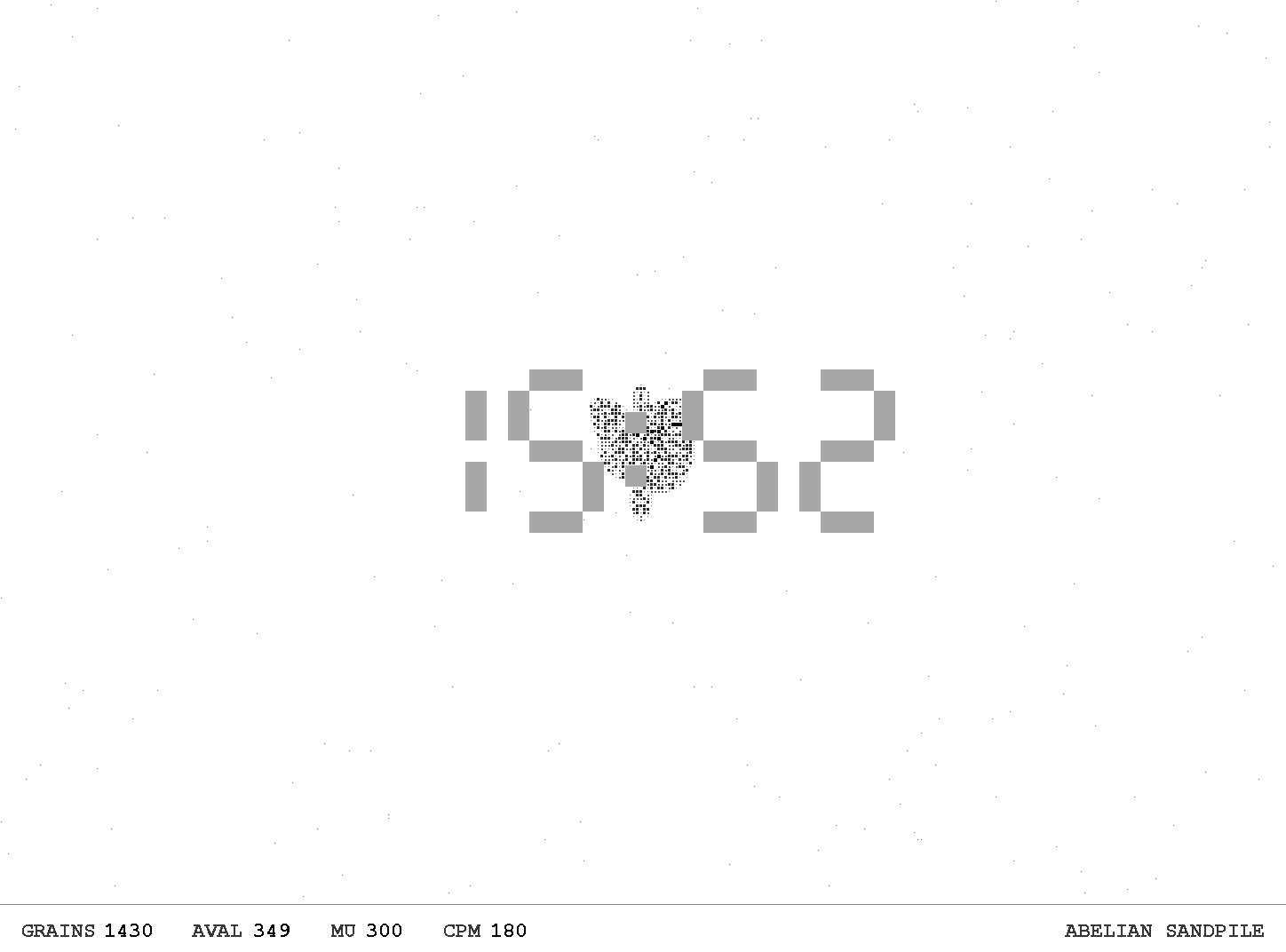
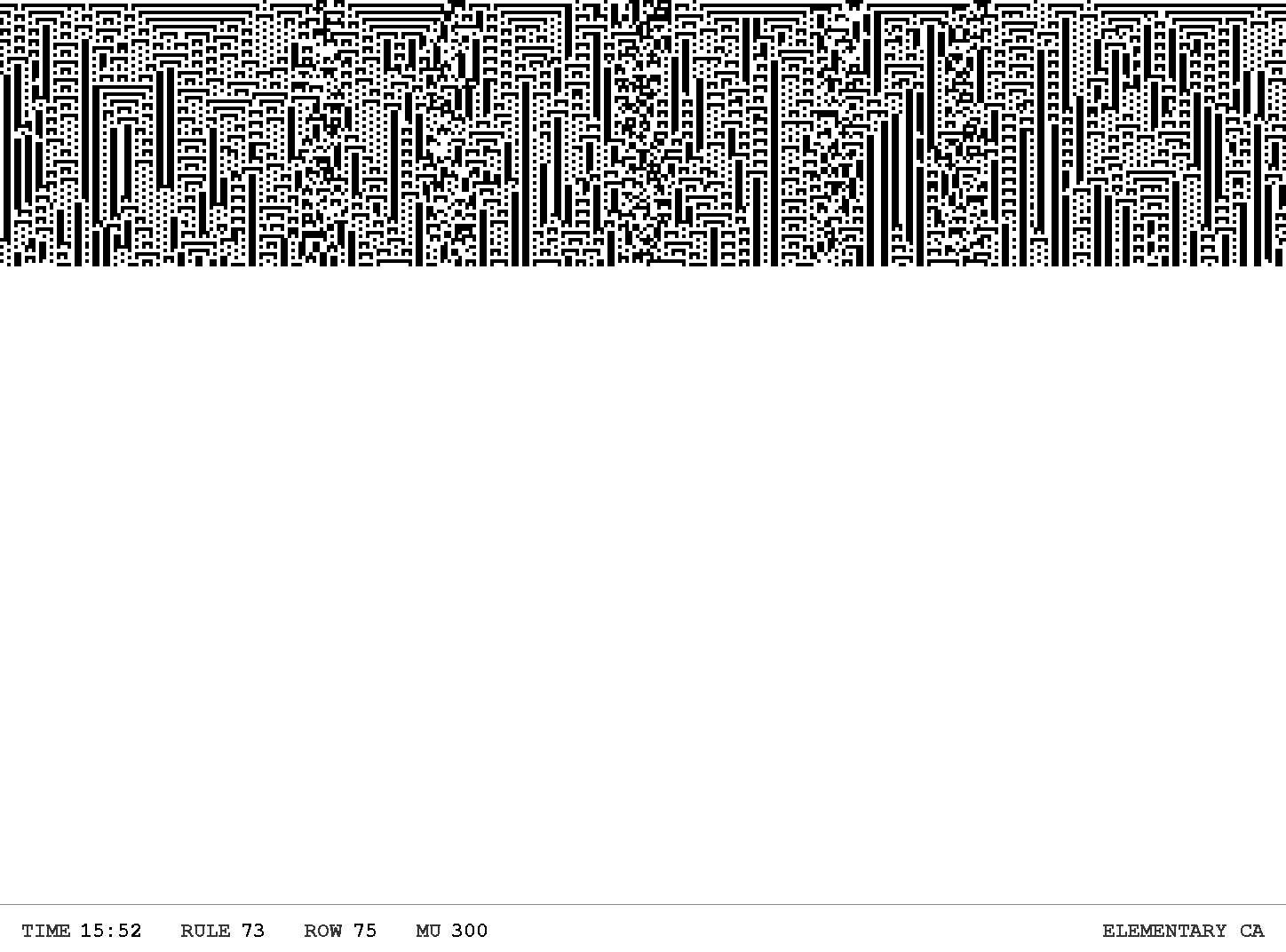
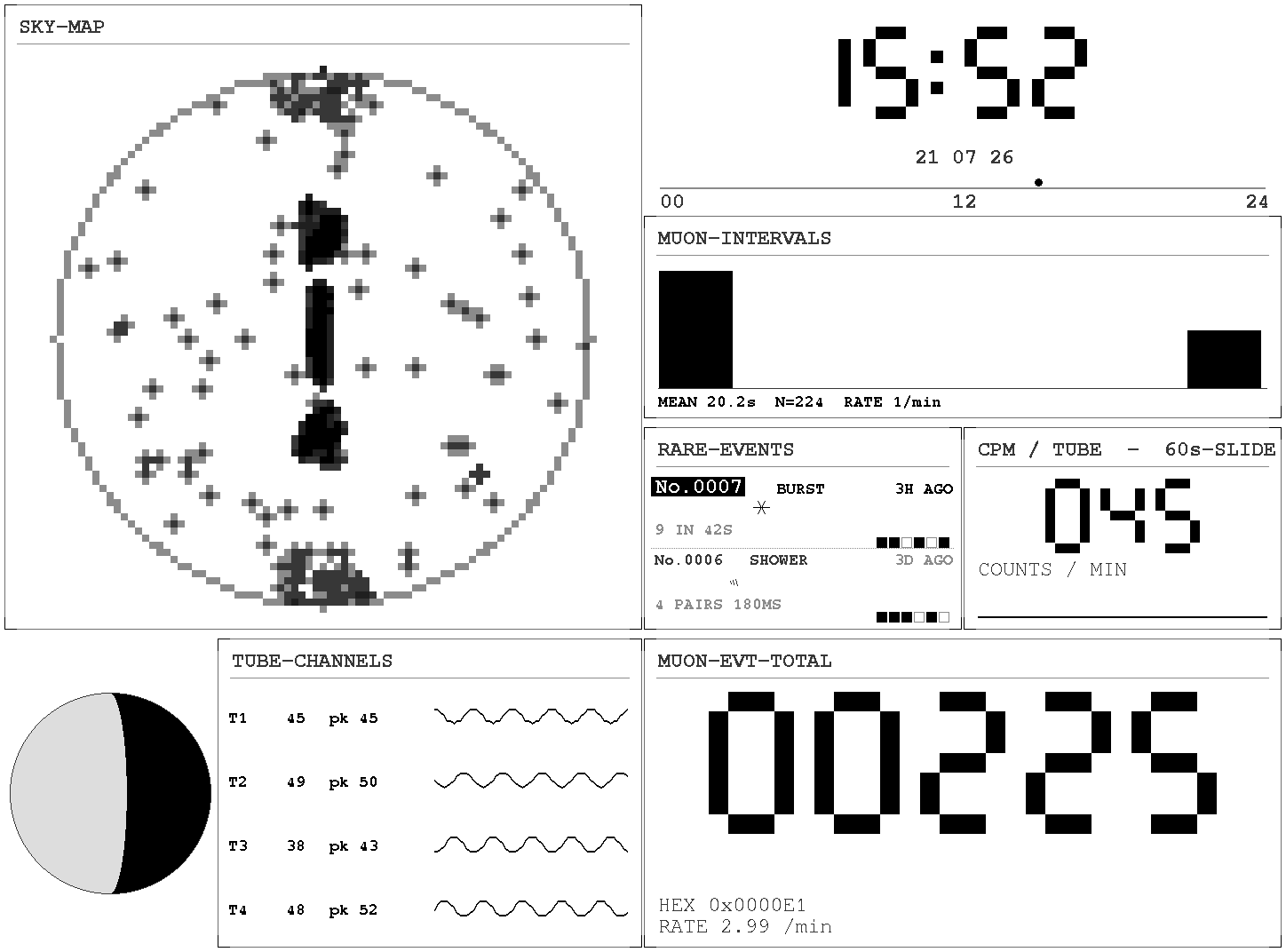
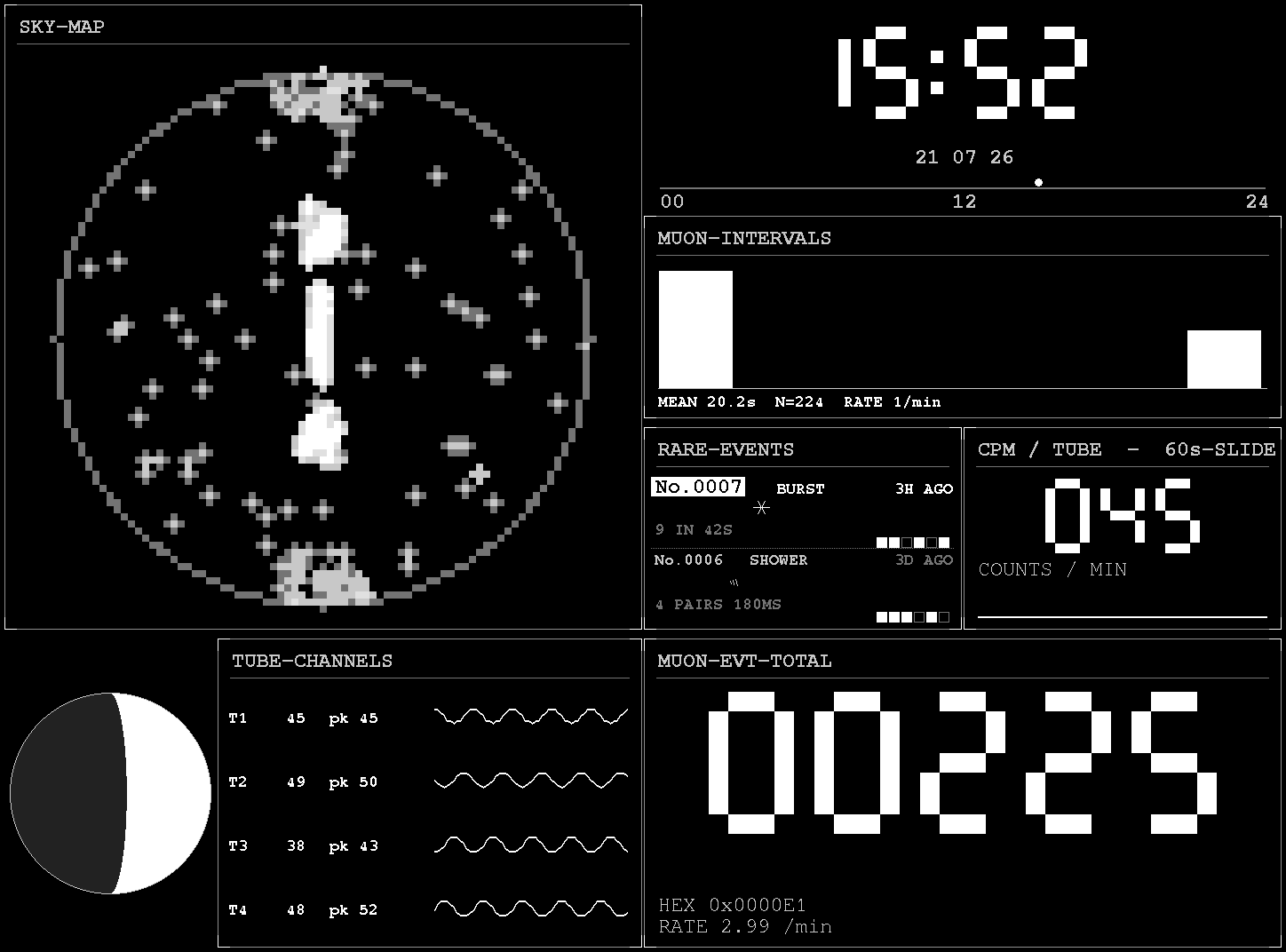
Every image below is unretouched output from the firmware that runs on the device today, captured at panel resolution. No render tricks, no concept art.
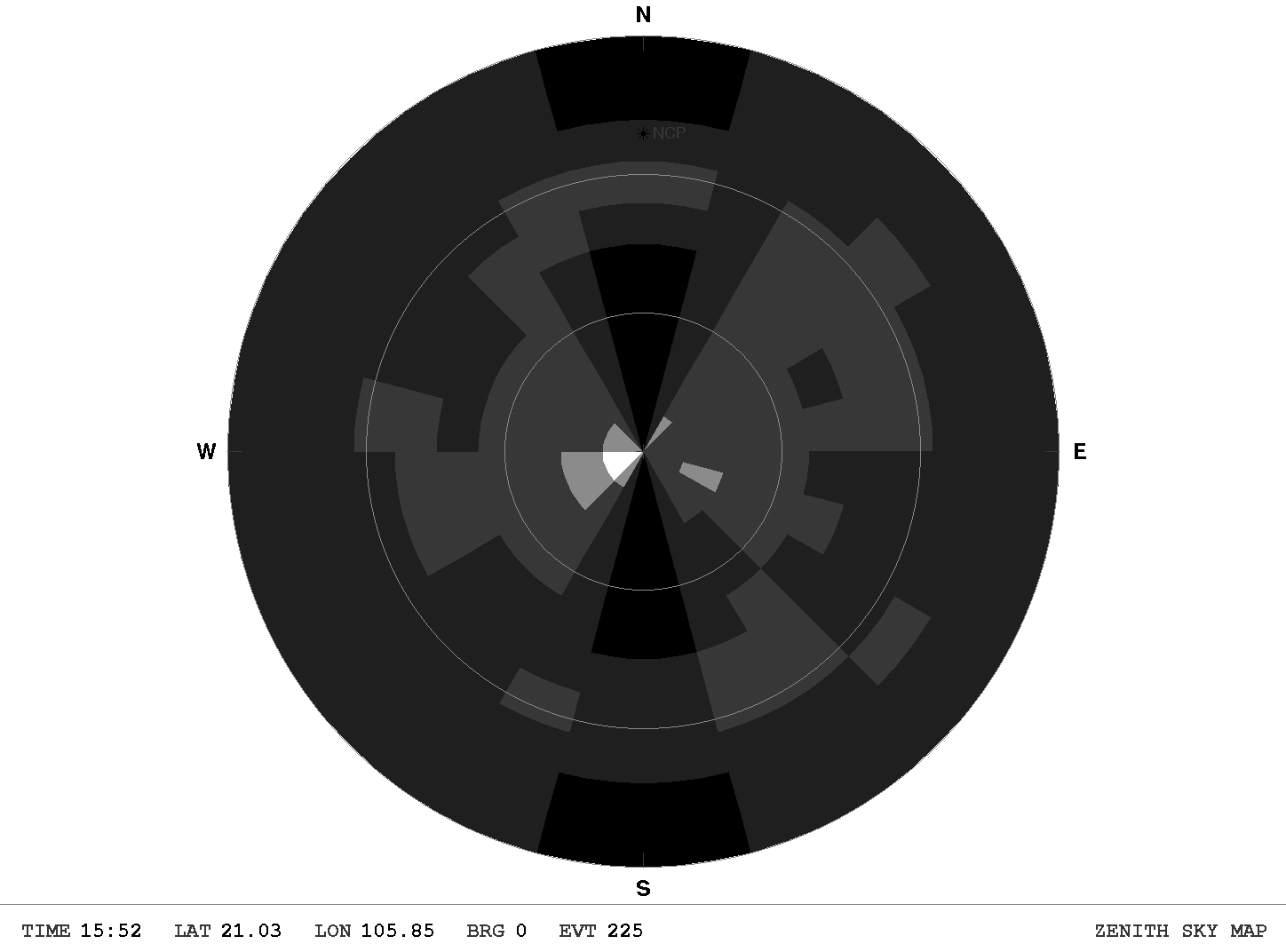
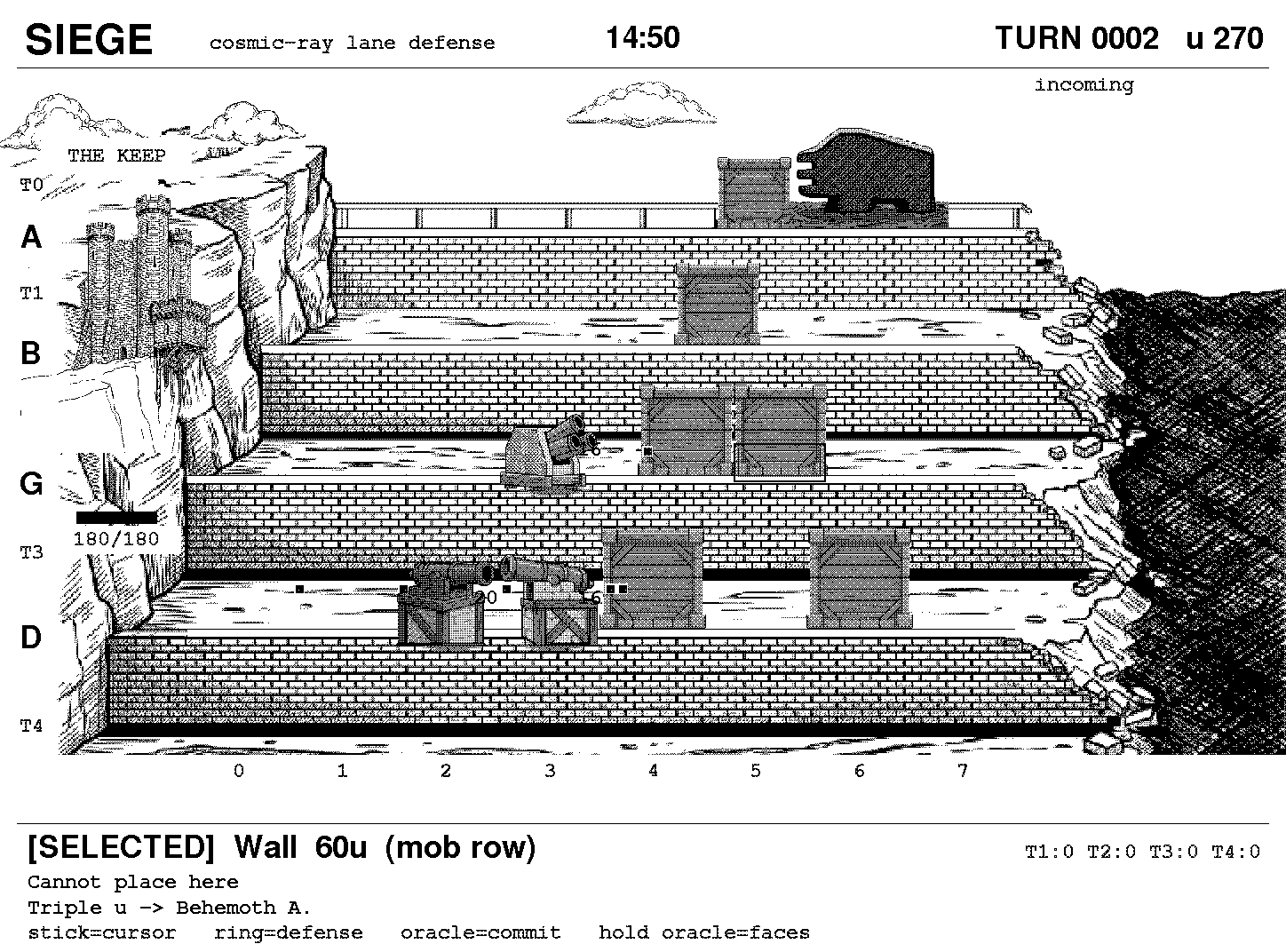
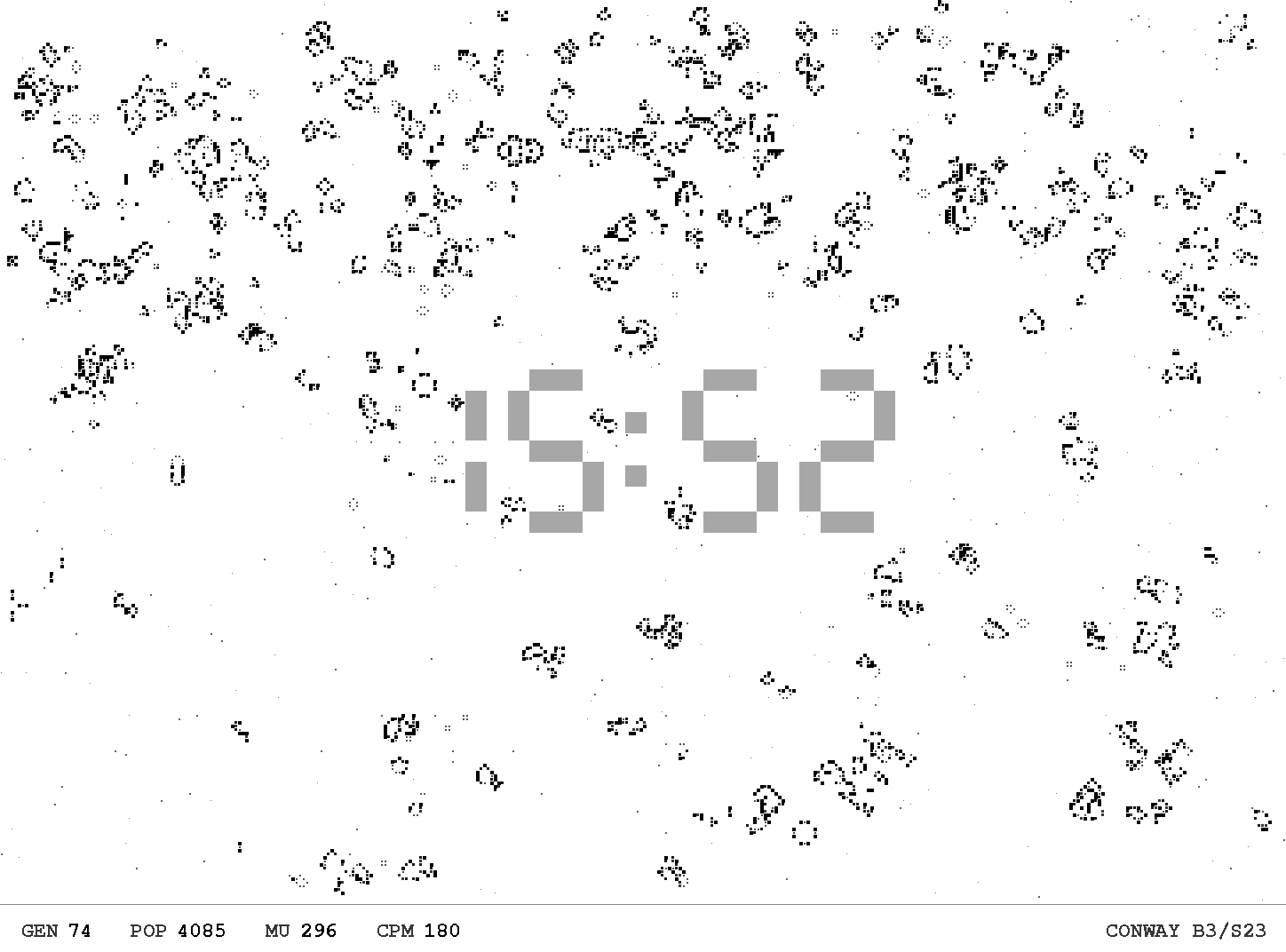
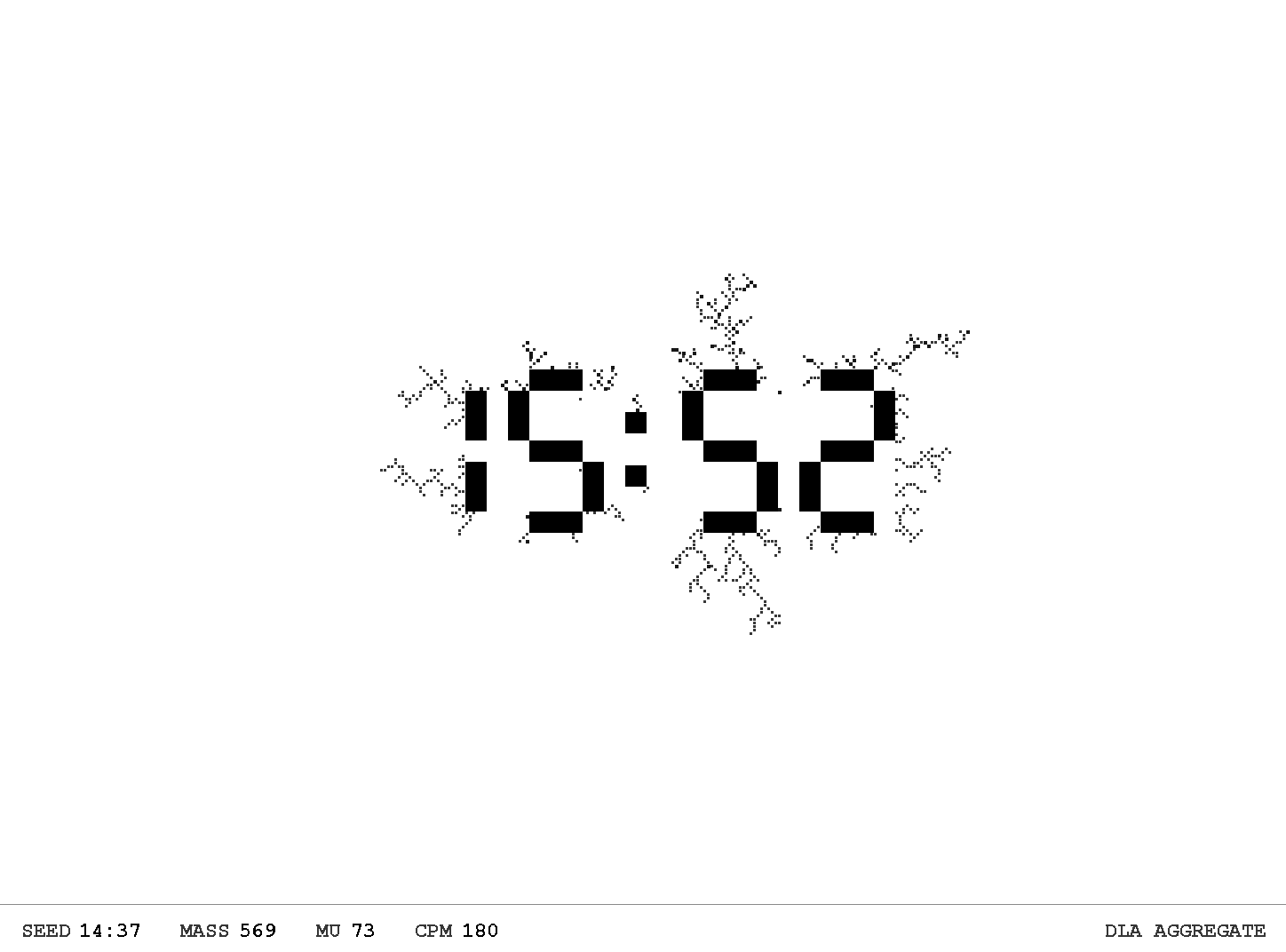
Layouts
The home dashboard is a widget grid
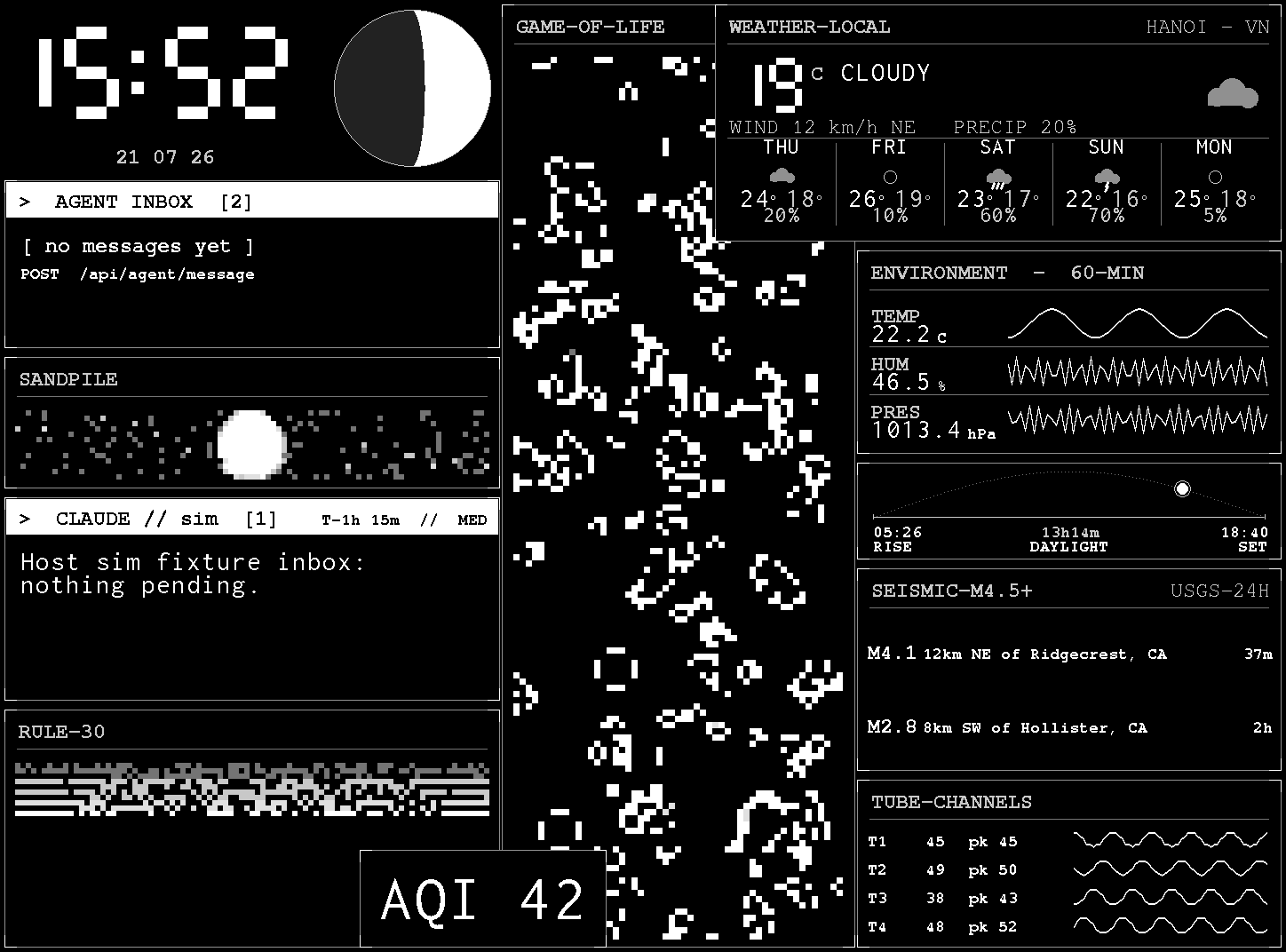
Pick the widgets, sizes, and fonts from the built-in web dashboard, and run the panel black on white or white on black. Three arrangements of the same clock, same firmware:
Reserve
Hold a place in the first batch
Reservations are open now. The Kickstarter campaign is planned for late 2026, and reserving early is how you get the low numbers.
Reserve your unit for $5. Credited toward your Kickstarter pledge. Fully refundable.
Founders Edition
- Engraved unit number
- Custom boot screen
- First batch shipment
Retail
- MSRP once the Kickstarter closes
- Reserving now locks the lower price
Units 001 to 009 are held back for press, beta testing, and giveaways, and are never sold. A reservation is not a purchase: it holds your number and your tier, and you can refund it yourself at any time. Campaign timing is a plan, not a promise.
Hackable
Fully hackable, down to the muon
The firmware will be open source and the whole device is a platform. It speaks REST, WebSocket, and MQTT on your LAN, the dashboard layout is a JSON file, and the clock faces are C++ modules anyone can add to. When it ships, you get the code that runs it.
That turns the detector into an instrument in every sense. Route events through the dashboard's MIDI bridge and the universe plays your synths, one note per muon. Pull true random numbers from the REST API for your own projects. Or wire the coincidence stream into a slot machine and let the cosmos decide when you hit the jackpot.
It is all being built in public, one evening at a time on a bench in Hanoi. If you want to see how a cosmic ray detector actually gets made, the dev log is the honest version.
Mailing list
Build updates while the hardware comes together, then the launch alert when the campaign goes live.