Reserve a numbered unit from the first run.
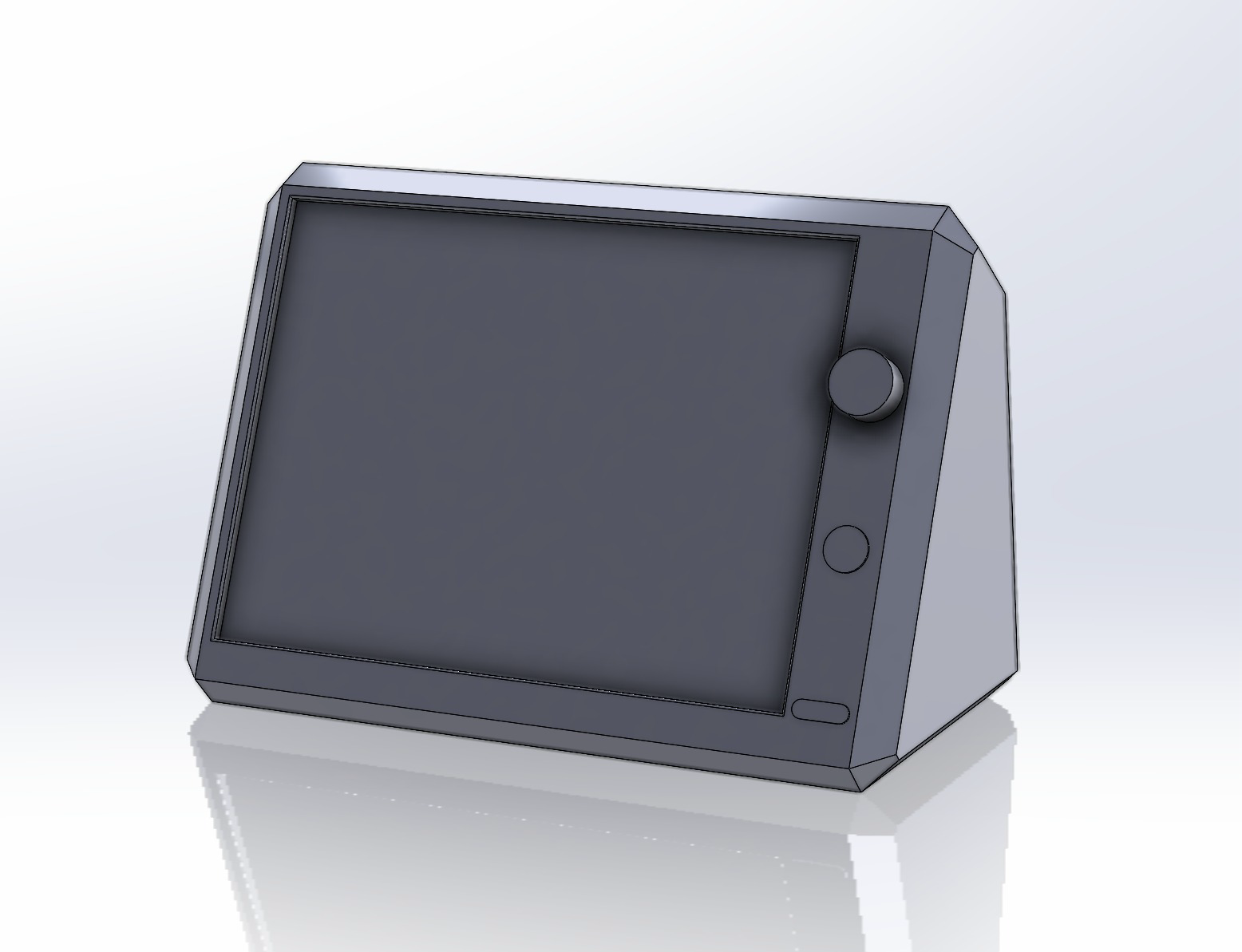
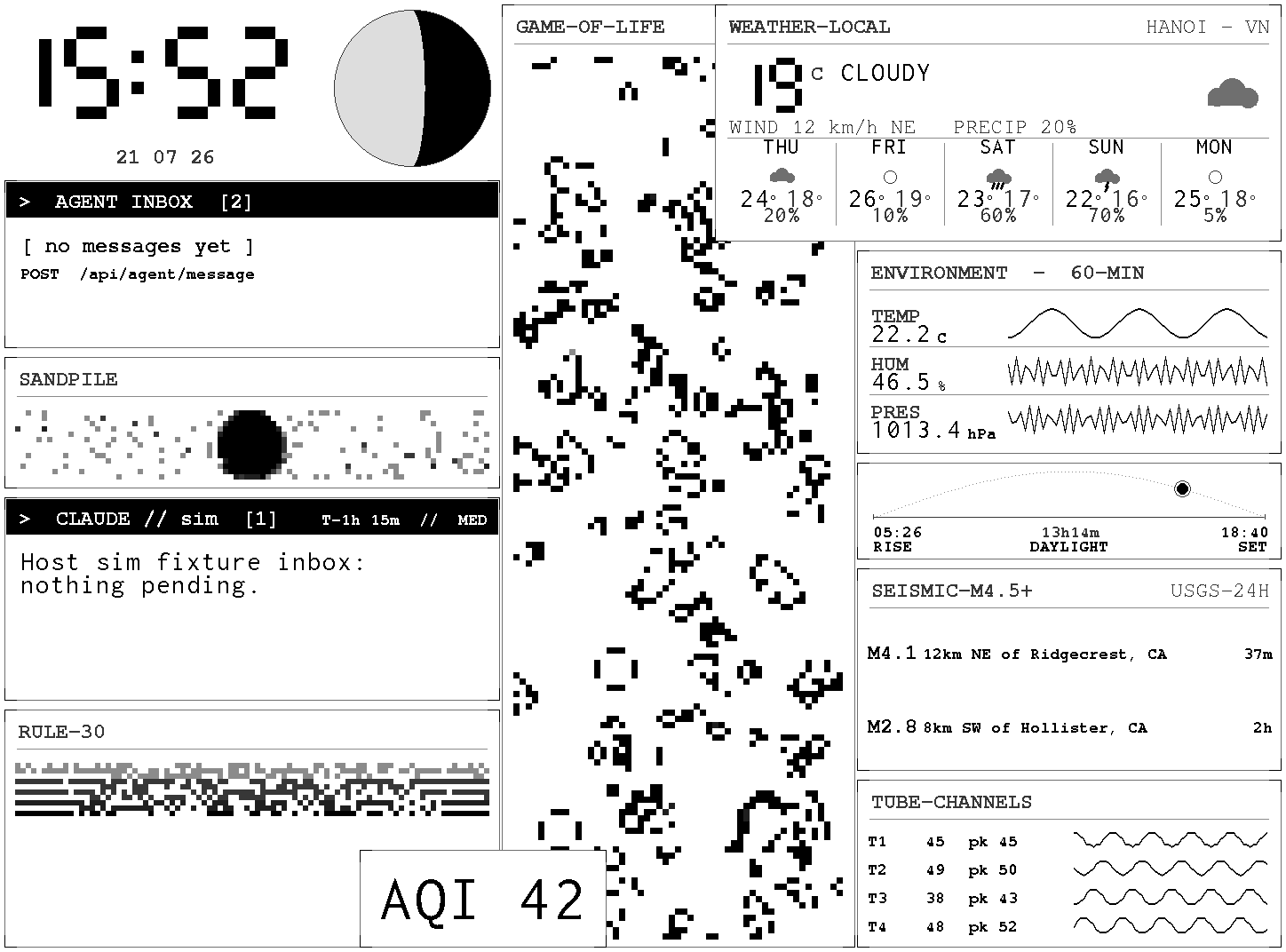
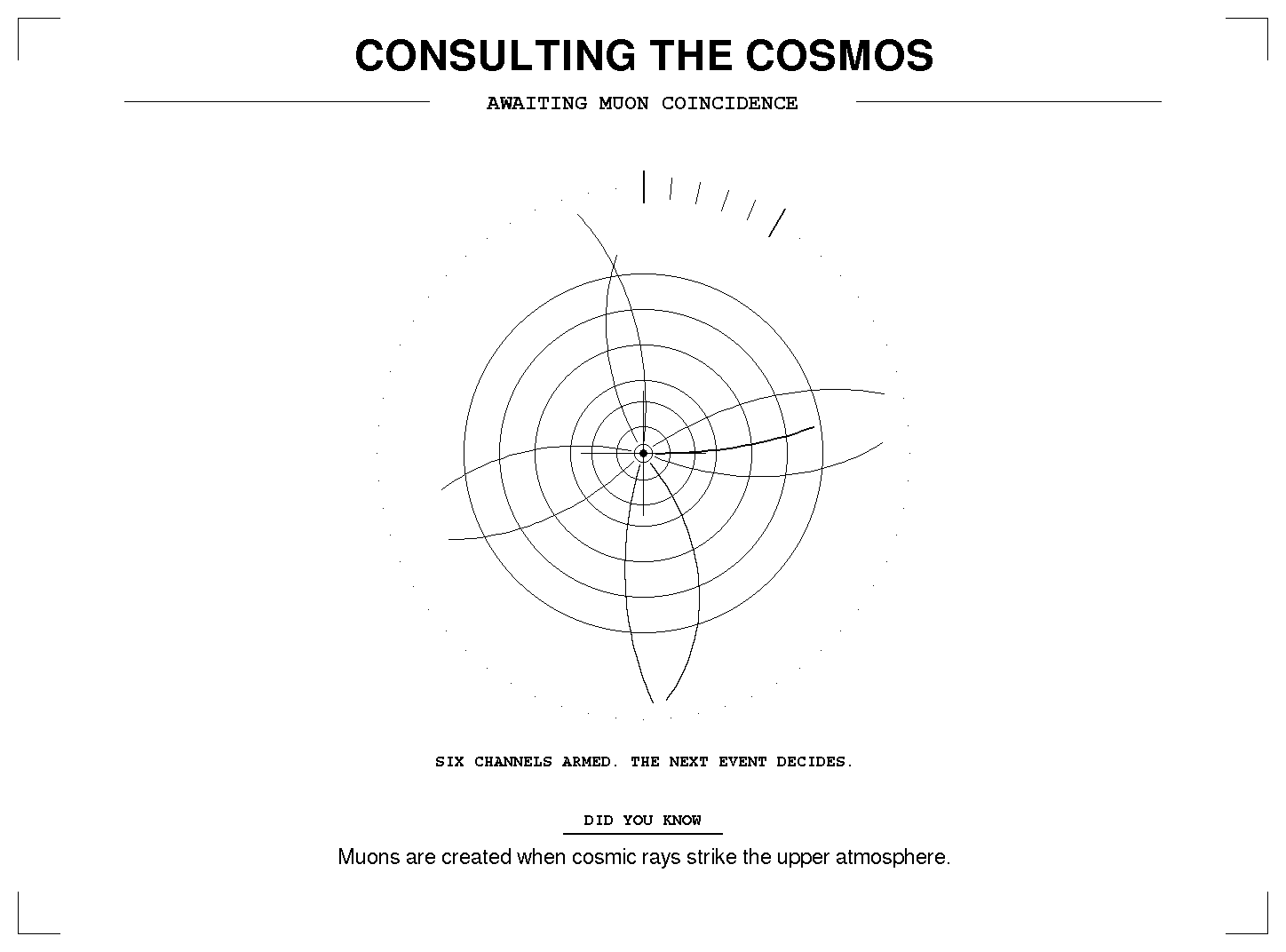
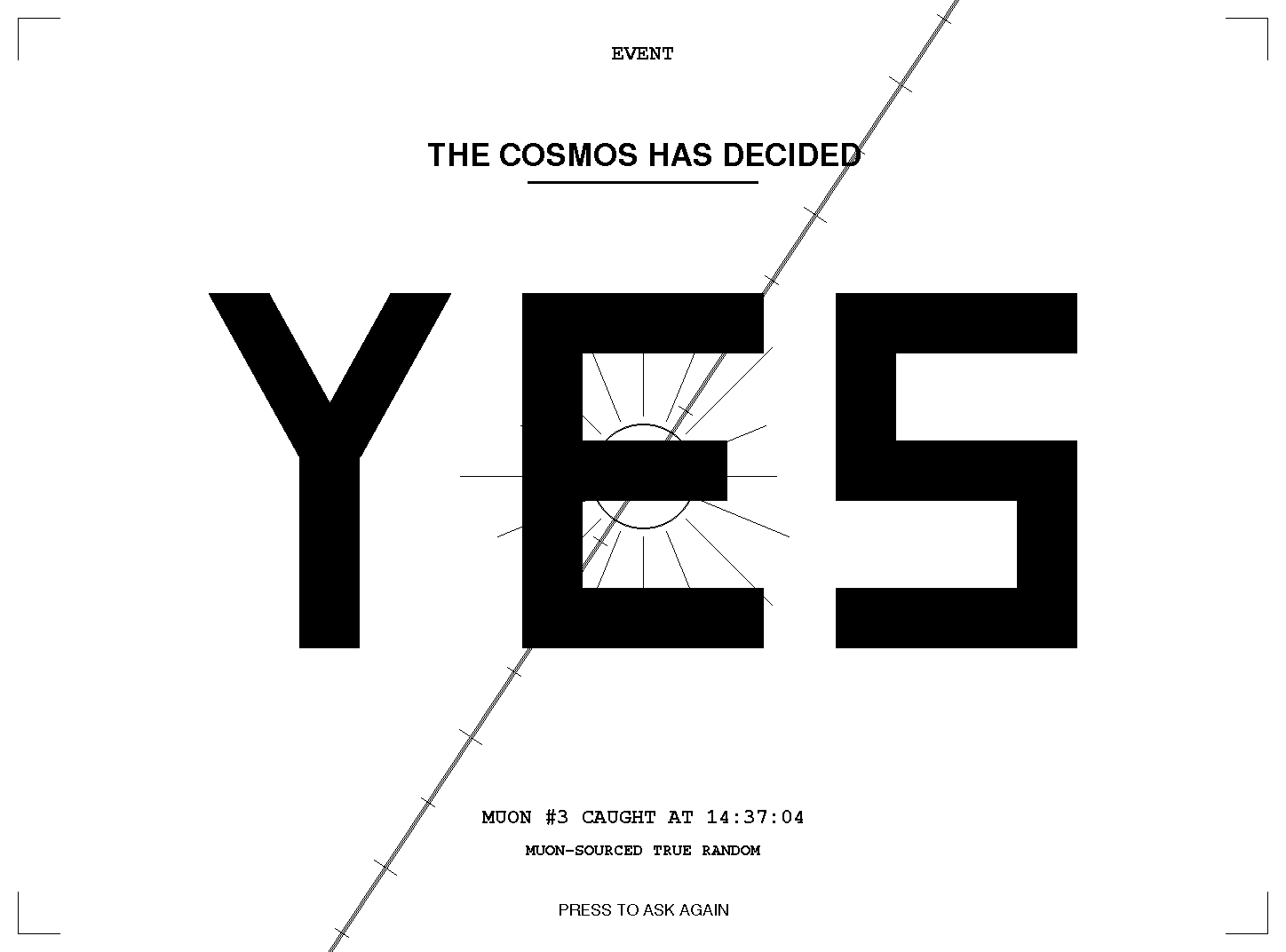
Muon Sortes is a desk clock that consults the sky. A high resolution e-ink face up front, Geiger-Müller tubes behind it watching for cosmic ray muons. Ask it a yes or no question; it waits for the next muon to pass through and answers with whatever the universe sent.
The first production batch is 100 numbered units. A $5 hold reserves your number and your price. The hold is credited toward your Kickstarter pledge and is fully refundable.
Reserve your unit for $5
- $5 locks your number and your tier price.
- Credited toward your Kickstarter pledge when the campaign launches.
- Fully refundable any time. Reply to your receipt to request a refund.
- Auto-refunded if the campaign does not launch or does not fund. You take no risk.
No shipping address required now. Reservations expire 14 days after the Kickstarter campaign closes if no pledge is made.
Founders Edition
- Numbered unit, engraved on the back plate
- Custom boot screen, your name or message
- Lowest price offered, ever
- More perks added before launch
Early Backer
- Numbered unit, engraved on the back plate
- Ships in the first production batch
- Kickstarter price locked
Standard Reservation
- Same hardware, no engraved unit number
- Ships in the second production batch
- Kickstarter price locked
What does the $5 actually do?
Holds a numbered unit (or a Standard slot) and your tier price. When the Kickstarter campaign launches, you pledge there for the rest. After you pledge, your $5 is refunded, so the hold is credited toward your unit.
Is it really fully refundable?
Yes. Reply to your Stripe receipt and we refund within a few days, no questions. If the Kickstarter does not launch or does not fund, every reservation is automatically refunded. You cannot lose money on this.
When does the Kickstarter launch?
The hardware prototype is on the bench right now. Date is not locked yet, target is later in 2026. Follow the dev log for the running build story. Reservations remain open until the campaign closes.
What if my tier sells out?
The Founders tier is capped at 20 units. Early Backer is capped at 70. After those sell out, only Standard reservations remain. Higher tiers will be shown as sold out on this page. Standard reservations have no unit cap.
Why a muon detector?
Because every random number this thing produces is sourced from a particle born high in the atmosphere when something from deep space hit Earth. Same idea as Cloudflare's lava lamps for hardware entropy, just at a different scale. The clock keeps time, the sky keeps the verdict.
Can I email instead?
Yes. Reach the founder at hello@muonsortes.com.
What is a muon. Where they come from, why they reach the ground.
Cosmic ray random number generators. Why muons make good hardware entropy.
How coincidence detection works. The two-tube trick that isolates muons from background.